Avg time on site
+0.0%
Up from the pre-redesign average. Microsoft Clarity.
PRODUCT DESIGNDESIGN SYSTEMSUX LEADERSHIP
Design leader and product designer. I own the decisions that ship products, at Popular Bank, PepsiCo, and Bluebeam.
THE MAIN LINE
The work I shipped inside Popular Bank, PepsiCo, and Bluebeam.
Popular Bank
SENIOR PRODUCT DESIGNER · DESIGN SYSTEM · BANKING
Mar 2024 – Present
Popular Bank's product surfaces had drifted. Different teams shipped different patterns, and Association Banking, the platform serving the bank's member associations, carried the inconsistency into experiences that real customers used to move real money. There was no shared system holding it together, and no single owner accountable for making one.
I was brought in as Senior Product Designer. I owned the design system across the bank and managed a team of two designers, setting the direction they worked against and mentoring them as they grew into it. My job was not to draw every screen. It was to decide what "consistent" meant here, and to get a room full of stakeholders who did not report to me to agree to it and build against it.

I chose to evolve the system rather than rebuild it. I anchored the new direction to a recent brand redesign, then took the existing base-level design system and extended it, layering atomic elements throughout so the system grew from what teams already used instead of replacing it wholesale. It kept the work grounded in reality and gave every team a consistent foundation to build on.
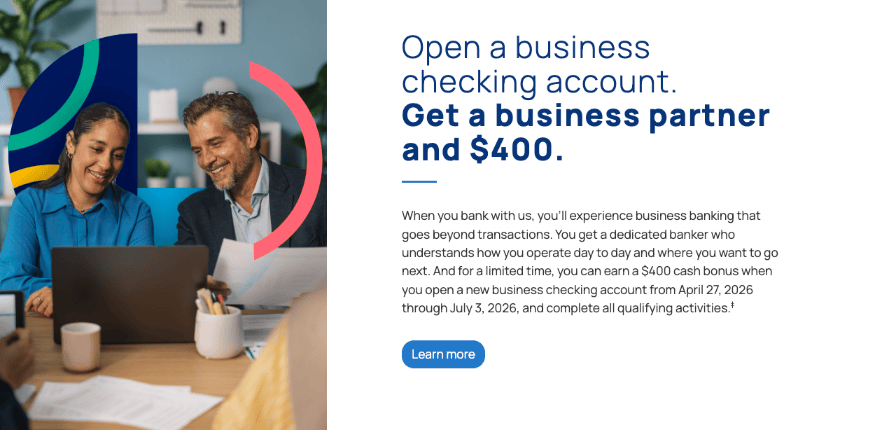
I ran the stakeholder alignment directly. The Association Banking group, which serves condo and HOA boards nationwide, pushed to keep a separate visual identity. Part of it was audience, arguing their specialist clients expected it, but most of it was inertia: they had run the same playbook for years and did not see what a unified system bought them. I made the case in their terms, not mine. The new brand needed to hold across every vertical to rebuild trust in a site that had drifted for five years, and because their content patterns mirrored the retail verticals, extending the system to their pages cost their team almost nothing. Leadership agreed. Association Banking kept its dedicated domain, but its redesign was brought into the unified system.
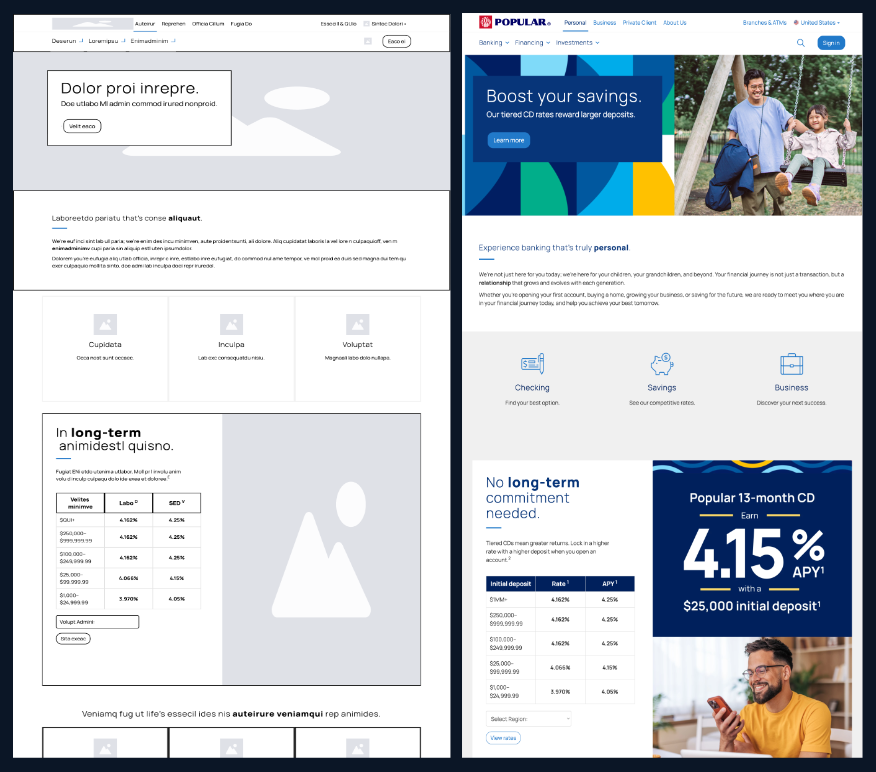
Before anything earns color, photography, or a headline, it has to survive in grayscale. These wireframes are where I pressure-tested the layout for Popular's checking promo and CD offer — no brand polish to hide behind, just hierarchy, spacing, and whether the argument actually landed in the order a customer would read it. Once the structure held up on its own, it earned the visual language you see in the final site.
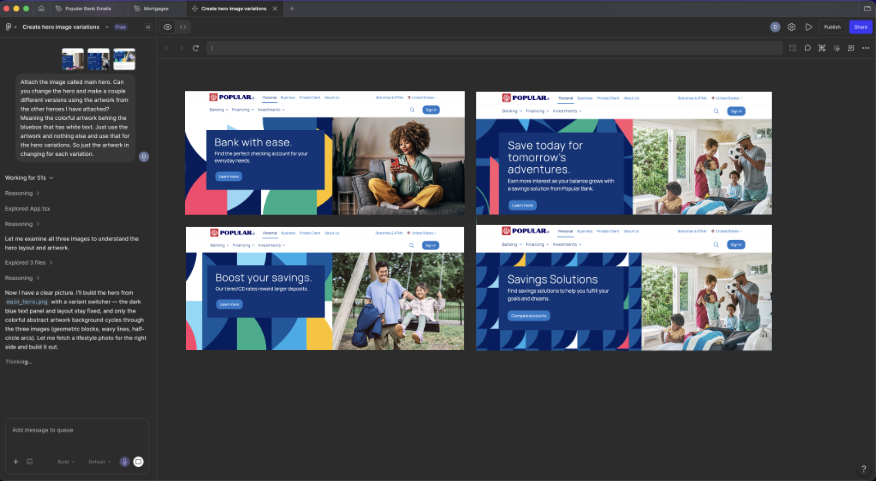
Rapid variation is where a lot of design systems quietly rot: every new layout option is another set of layers to maintain. At Popular, I brought Figma Make into the workflow to automate the tedious part, spinning up layout variants fast, generating multi-language mockups for localization testing, and cleaning up layers as I went so the system stayed lightweight instead of accumulating debt with every new screen.
The hard call
The Association Banking group pushed to keep a separate identity. Part of it was audience, but most of it was inertia: same playbook for years, no felt need to change. I made the case in their terms, not mine. The unified system rebuilt trust across a site that had drifted for five years, and their content mirrored the retail verticals closely enough that adopting it cost their team almost nothing. Leadership agreed.
The system became the reference other teams built from, and the redesign moved the behavior that mattered. In Microsoft Clarity, average time on site rose 7%, and customers came back more often. The unified experience held attention where the fragmented site had lost it, which was the whole case for consistency in the first place.
Up from the pre-redesign average. Microsoft Clarity.
Customers came back more often after launch.
Became the reference other teams built from.
PepsiCo
PRODUCT DESIGN · SUPPORT · ENTERPRISE PLATFORMS
Sep 2023 – Mar 2024
PepsiConnect is how PepsiCo's business customers order and manage their accounts. When something went wrong, too many of them had no way to fix it themselves, so they waited on an agent. Support load was high and the customer experience was slow, and the fastest lever was not more agents. It was letting people solve their own problems.
I designed the support flows for PepsiConnect, including a WhatsApp self-serve channel built for how these customers actually communicate. The goal was deflection that felt like help, not a wall between the customer and a human.
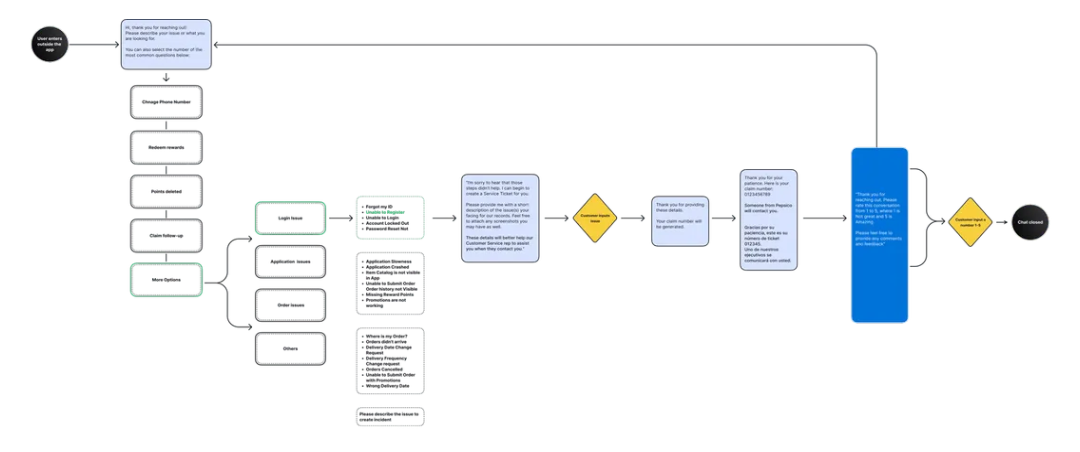
I designed for the channel customers already lived in rather than forcing them into a portal. Meeting them in WhatsApp removed the friction of logging in somewhere new to ask a simple question, and it let the support flow live where their attention already was.
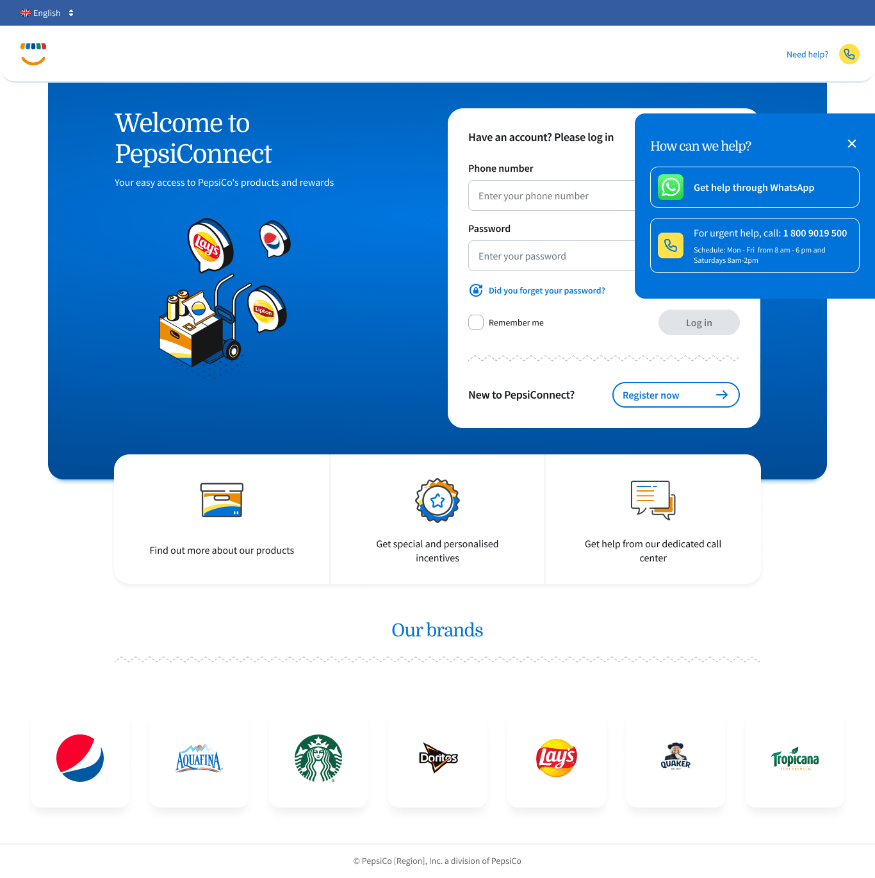
Speed was the constraint. PepsiConnect needed an MVP fast, so I ran a tight loop: daily syncs with the PM to lock priorities, regular check-ins with stakeholders to pressure-test the customer flows against reality, and standups where I walked the team through each flow so nobody was designing in the dark.
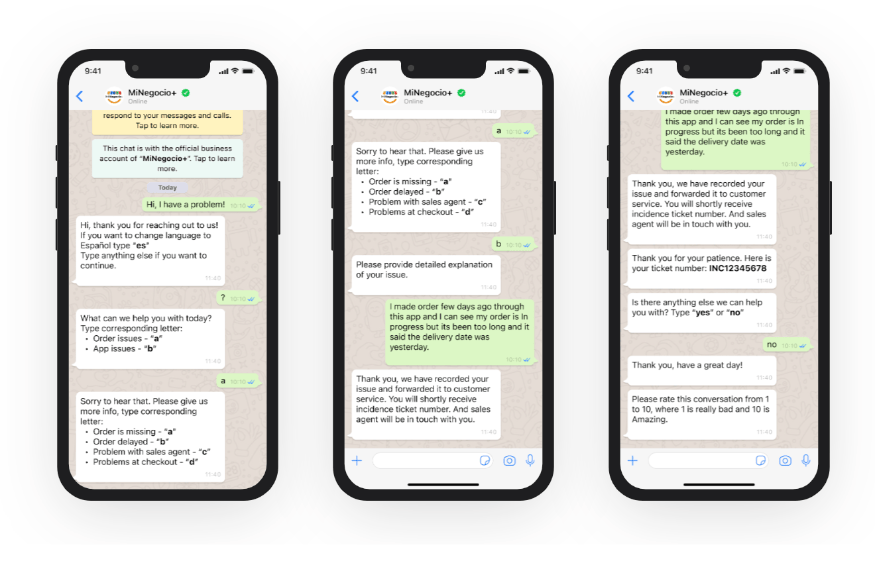
The flows themselves weren't guesses. We pulled them straight from call center data, the issues generating the most inbound calls and emails: missing reward points, order tracking, password resets. If it was creating friction at scale, it earned a self-serve path.
The hard call
The pressure was to automate everything. I drew the line at flows where a wrong answer costs the customer money — those kept a fast path to a human. Self-serve that traps people isn't self-serve.
Self-serve resolution rose from 21% to 48%, measured in Microsoft Clarity. Nearly half of customers now resolved their issue without ever reaching an agent, which cut support load and gave customers a faster path to an answer.
Up from 21%, measured in Microsoft Clarity.
Bluebeam
DESIGN MANAGER · BLUPRNT DESIGN SYSTEM
Sep 2021 – Aug 2023
Bluebeam's legacy website needed a full redesign, and it had no design system underneath it to build on. The honest way to do this was sequential: build the system, then build the site on top of it. That was also the slow way, and the timeline did not allow for slow.
I led the redesign as Design Manager, and I owned both problems at once: the new site and the design system it would stand on. I managed a small team of designers through it.
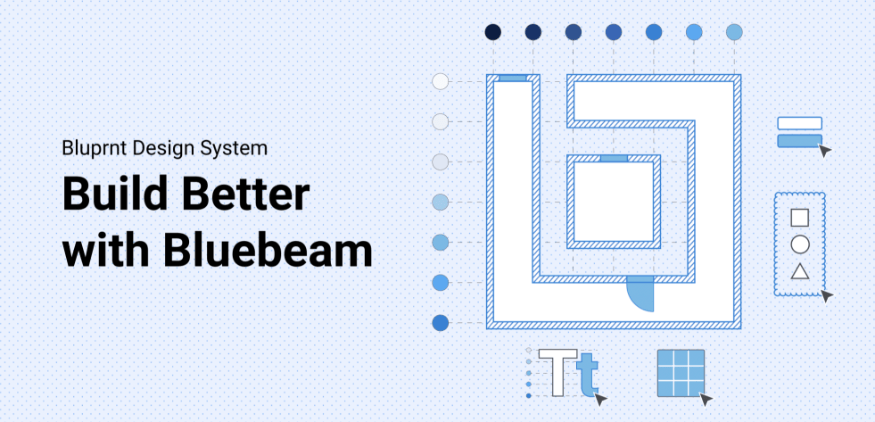
I made the call to build bluprnt, the design system, and the new site concurrently in Figma instead of one after the other. It was the riskier sequencing, because the foundation was being poured while the house went up on top of it. But building them together meant every component was validated against a real page the moment it was made, and it was the only path that fit the three-month window.
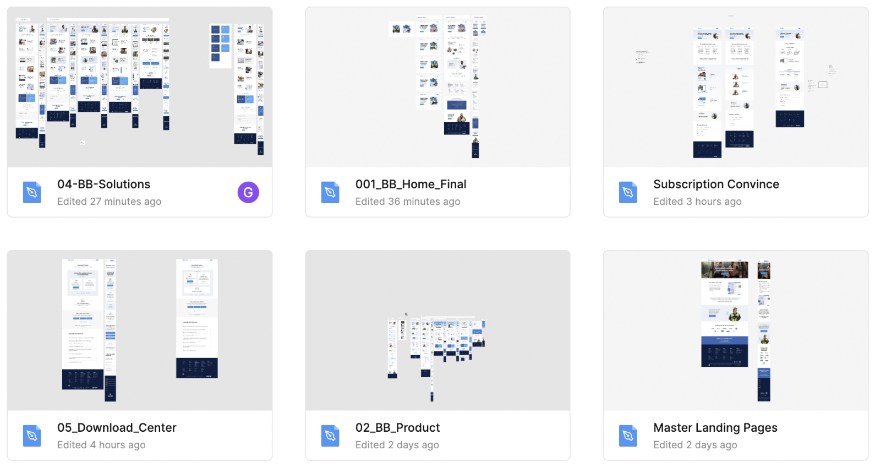
In ideation, we sketched ideas against the personas and the business goals we had already set. I brought stakeholders into those sessions to test our thinking early, so the design system supported what the new site actually needed to do.


The hard call
I chose to build the design system and the website at the same time rather than finishing the system first. It meant living with ambiguity and reworking components mid-build, but sequencing them the safe way would have blown the deadline. The concurrent build is what made three months possible.
Both shipped in three months. A rapid-response microsite drove 85% upgrade conversion, and time on site rose 23% after the redesign. bluprnt outlived the project as the system the team kept building on.
To ship both the design system and the redesigned site.
From the rapid-response microsite.
Increase after the redesign.
Parallel Lane
FOUNDER · THREE VENTURES
The main line is the work I did inside other companies. These are the products I conceived, designed, and built on my own.
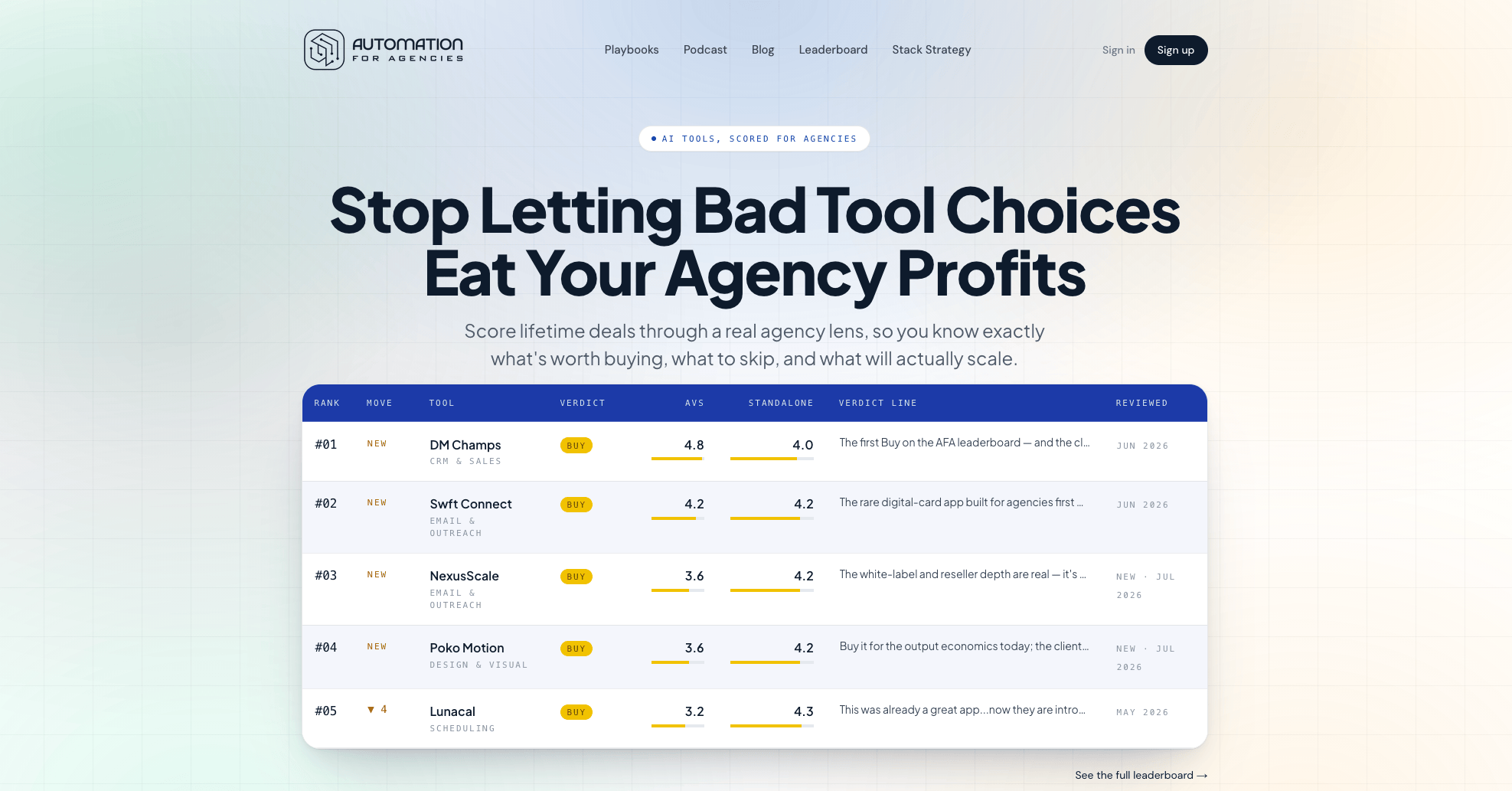
FOUNDER · EDITORIAL PLATFORM
An editorial platform that scores automation tools on whether they survive inside a real agency. Paid, never bought: a tool can pay for a look, it can't buy the number.
Visit →
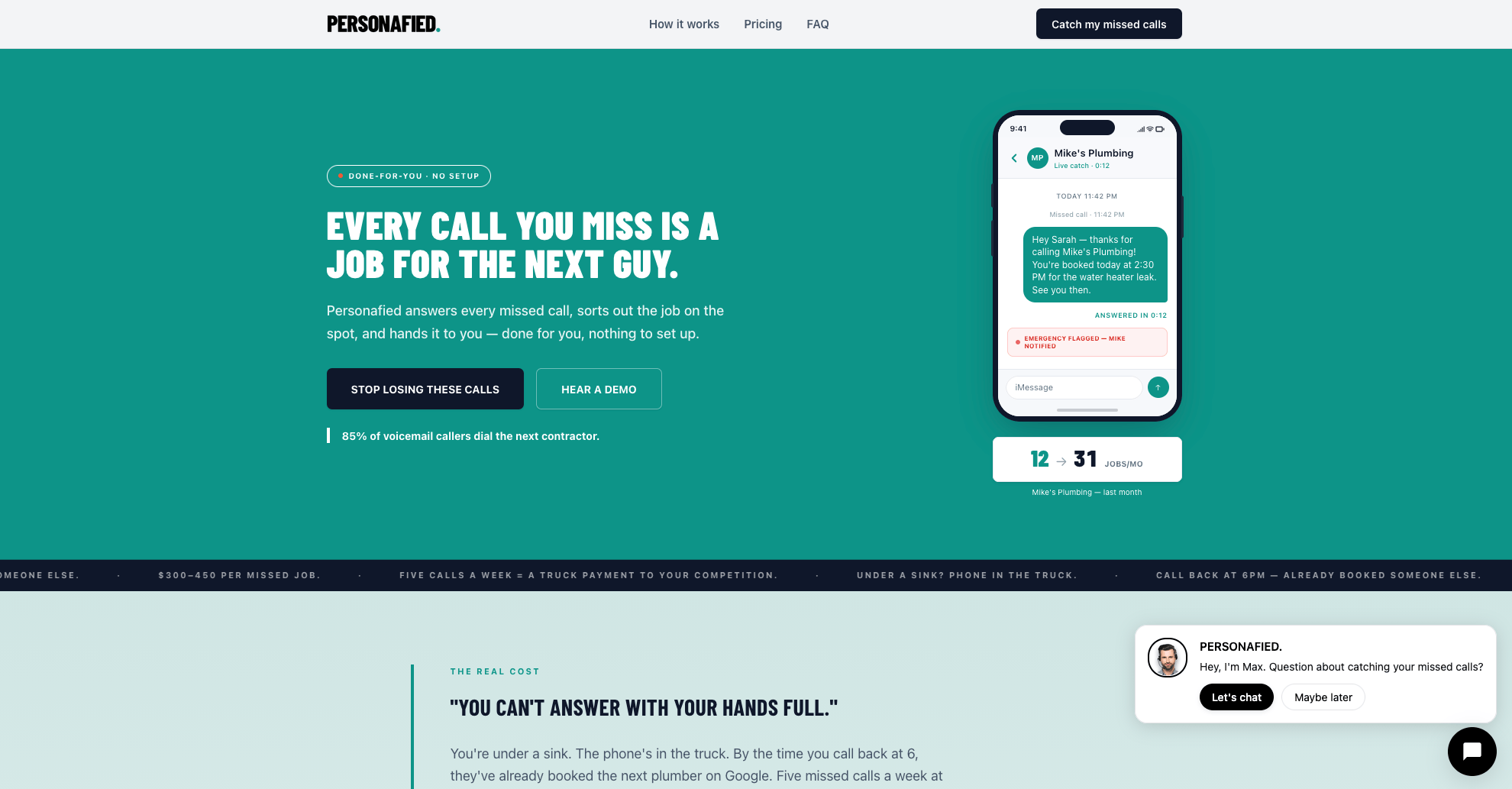
FOUNDER · AI VOICE AGENT
An AI voice agent that catches the calls trade businesses miss, qualifies the job on the spot, and hands back a booking. Built for plumbers, roofers, and electricians who can't answer with their hands full.
Visit →
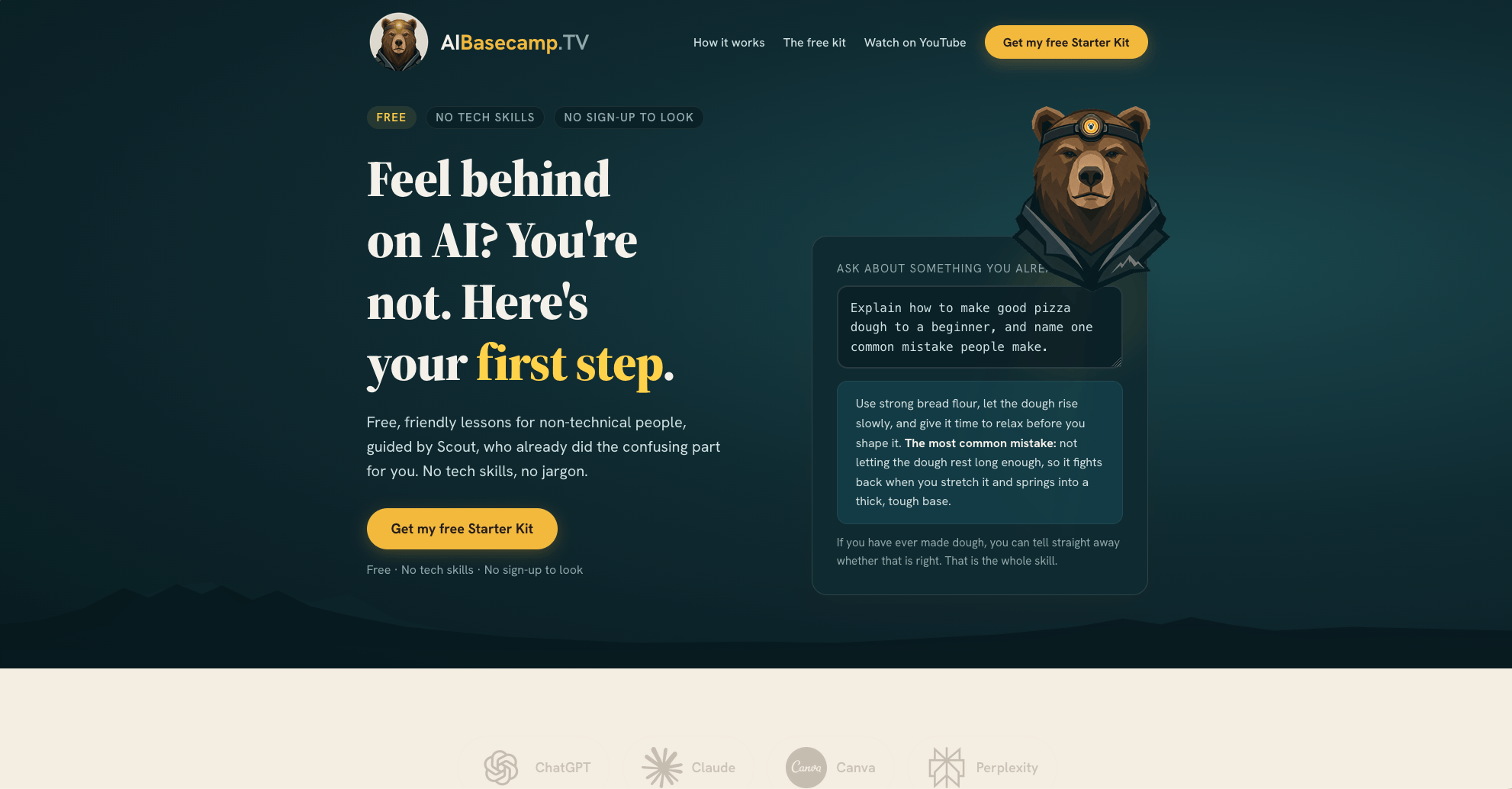
FOUNDER · AI EDUCATION
Friendly, free AI lessons for non-technical people taking their first step with AI. Plain language, no jargon, guided from basecamp up.
Visit →
Resume
CAREER LINE MAP
Popular Bank
Senior Product Designer
Mar 2024 – Present
Led a bank-wide design system and managed a team of two designers. Drove design and stakeholder alignment across the Association Banking platform, turning fragmented product surfaces into a consistent, governed system.
View case studyPepsiCo
Senior Product Designer
Sep 2023 – Mar 2024
Designed customer support and conversational experiences for enterprise platforms, including a WhatsApp support channel used by global stakeholders. Owned digital solutions across PepsiCo websites, product applications, and mobile apps.
View case studyBluebeam
Design Manager
Sep 2021 – Aug 2023
Led the redesign of the Bluebeam legacy website and built the bluprnt design system concurrently in three months. Managed a small team of designers.
View case studySpectrum
Sr. UI Designer
Jun 2018 – Sep 2021
Designed UI for Spectrum's customer-facing digital platforms, improving customer experience and adoption across the product suite.
Connect
END OF THE LINE
LAST STOP · STAMFORD BRANCH
If any of this landed, I would like to hear from you. Whether you are hiring a design leader or a senior product designer, or you just want to build something worth building, the conversation starts here.